Condo vs. Townhome vs. Single-Family Home in South OC: Which Is Right for You?
A Buyer's Guide to Understanding Property Types, HOA Costs & Long-Term Value in South Orange County
My clients often ask me some version of the same question: "Should I buy a condo, a townhome, or stretch for a single-family home?" It sounds simple. It isn't.
The answer depends on your budget, your timeline, your financing situation, and honestly — what you want your daily life to look like. This post breaks down every variable I walk buyers through, with real 2026 numbers from the South OC market.
Let's break this down.
The Definitions Most Buyers Get Wrong
Here's something that surprises a lot of people: "condo" and "townhome" are not architectural styles. They're legal ownership structures. And confusing them can create real problems when it comes to financing.
A condo is a form of ownership where you own the interior airspace of your unit — the walls, floors, and everything inside them — plus a percentage interest in the building's common areas. You do not own the land. The exterior of the building, the roof, the structure, the parking lot — all of that is owned collectively by the HOA.
A townhome typically refers to a multi-level attached unit — but it can be sold either as a condo (where you own only the interior) or as a planned unit development (PUD), where you own the unit and the land directly beneath it. Most buyers are shocked to learn that a property that looks like a townhome on the outside might legally be a condo.
A single-family home (SFR) is what most people picture: you own the house and the full lot it sits on.
Why does this distinction matter? Because lenders care deeply about it, and I'll explain that in a moment.
What You Actually Own — and Why It Changes Everything
Understanding your ownership structure tells you exactly what you're responsible for and what the HOA covers.
Condo ownership:
- You own the interior of your unit (walls, fixtures, appliances, flooring)
- The HOA owns and maintains the exterior, roof, structure, and common areas
- You typically pay higher HOA fees in exchange for less maintenance responsibility
Townhome ownership (as a PUD):
- You own the unit and the land directly beneath it
- You often own your patio or small yard area
- The HOA typically covers shared walls, exterior maintenance on some communities, and common amenities
- Your HOA fees are generally lower than a condo
Single-family home:
- You own the house and the entire lot
- If you're in a master-planned community, there may be an HOA for common areas and landscaping, but it's typically a lower fee
- Every maintenance responsibility is yours — roof, foundation, yard, exterior, all of it
I always tell buyers: condos offer convenience, townhomes offer a middle ground, and SFHs offer the most control and responsibility. Know what you're signing up for.
2026 Price Reality Check in South Orange County
Let me give you the honest numbers. The condo vs townhome vs single-family home South Orange County price gap is significant — and it creates real strategic opportunities for 2026 buyers.
Single-family homes:
- OC-wide median: approximately $1.4M
- Mission Viejo: $1.0M–$1.1M (one of the more accessible SFH markets in South OC)
- Lake Forest: $950K–$1.1M depending on the neighborhood
- Laguna Niguel: $1.2M–$1.5M for a typical 3-bedroom
Condos and townhomes:
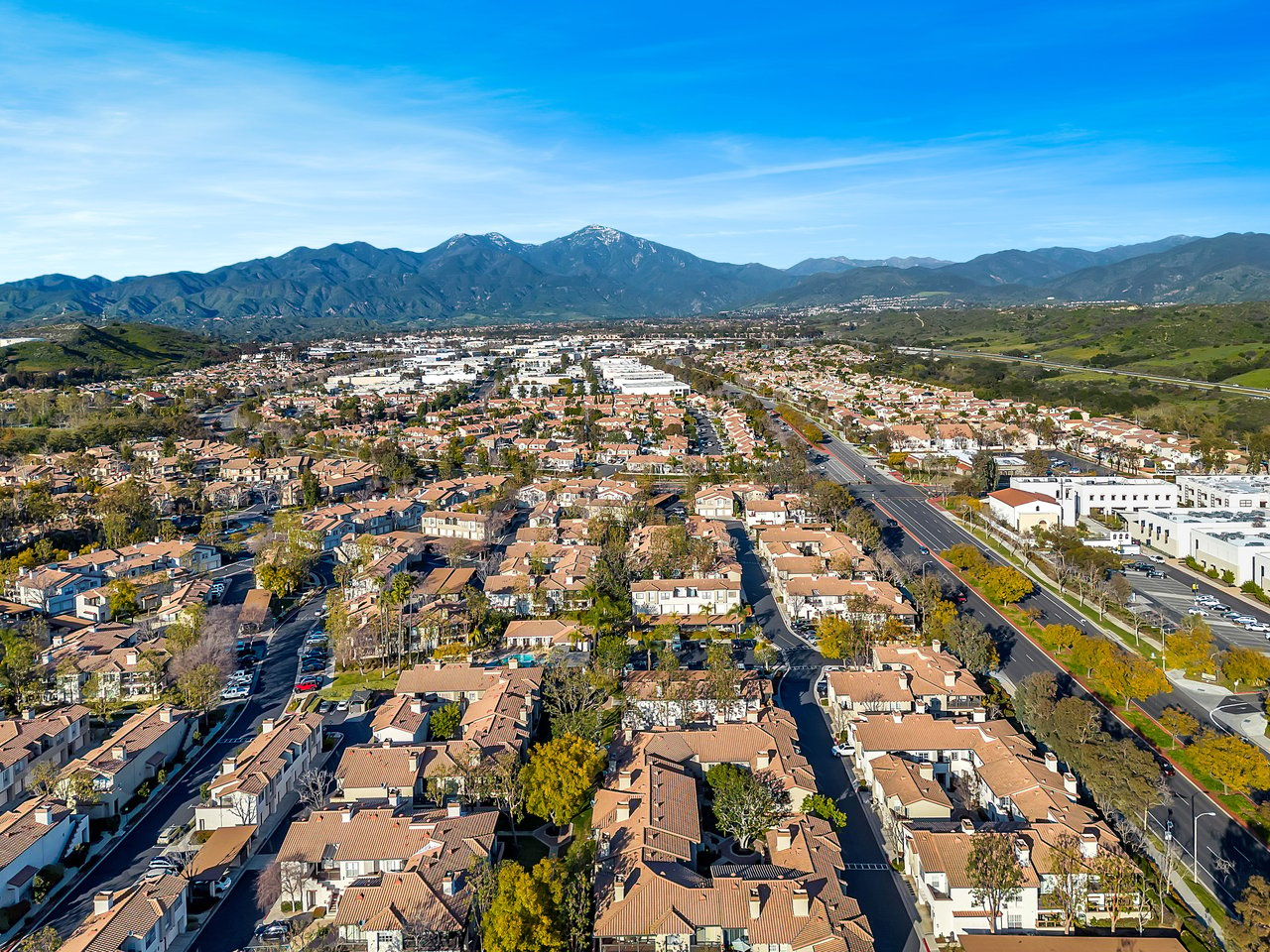
- Entry price in Aliso Viejo: $700K–$750K for a well-maintained 2-bedroom condo
- Lake Forest condos and townhomes: $720K–$800K
- Laguna Hills: $680K–$750K for attached units
- Some 3-bedroom townhomes in Lake Forest and Aliso Viejo: $800K–$900K
That $300K–$400K price gap between a condo and a comparable SFH is real. For a buyer putting 10–20% down, that's a meaningful difference in monthly payment and in how much cash you need to close. If you're comparing different cities in South OC, those price differences become even more pronounced.
HOA Fees: What to Budget Across Each Property Type
This is where buyers often get surprised. The purchase price is the headline, but HOA fees in South OC can add hundreds of dollars to your monthly cost — and they vary significantly by property type.
Condos: $300–$800/month
Condo HOA fees are the highest because the HOA is responsible for the entire building envelope — exterior, roof, structure, insurance on the building. In South OC, most condo communities sit in the $350–$550/month range. Higher-end communities or those with concierge amenities can run $700+.
Townhomes: $200–$400/month
Because you own the land beneath your unit and the HOA carries less structural responsibility, fees tend to be lower. Most townhome communities in Aliso Viejo and Lake Forest fall in the $250–$350/month range.
Single-family homes in master-planned communities: $50–$300/month
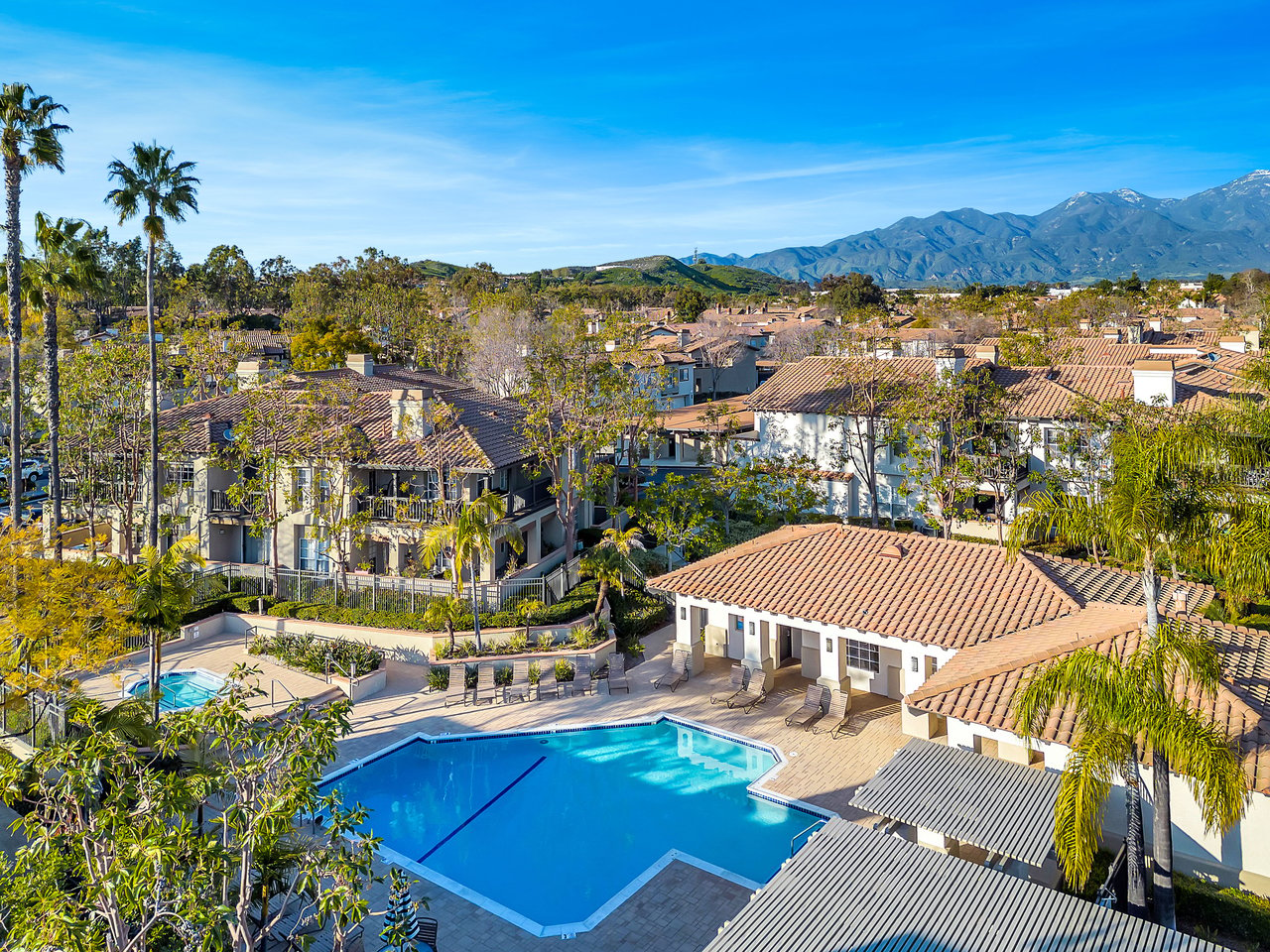
Most SFH HOA fees in South OC cover community landscaping, pool and recreation center access, and common area maintenance. Mission Viejo's City Association fee — which covers Lake Mission Viejo access — is one of the most famous examples: about $25/month, plus a one-time initiation fee. Other communities range from $100–$250/month.
Also factor in Mello Roos taxes if you're looking in newer developments — these are community facilities district taxes that can add $1,500–$5,000+ per year depending on the development. Some newer condo and townhome communities in Lake Forest carry them; older Mission Viejo neighborhoods typically do not.
The Hidden Landmine: FHA and Conventional Financing for Condos
This is the most important section in this post, and most buyers don't hear about it until a deal is already in trouble.
Not every condo can be financed with a conventional or FHA loan. A condo building must be "warrantable" — meaning it meets the guidelines set by Fannie Mae, Freddie Mac, or FHA — to qualify for standard financing.
A condo is typically non-warrantable if:
- More than 15% of units are delinquent on HOA dues
- More than 50% of units are renter-occupied
- The HOA carries insufficient insurance
- One entity owns more than 10% of the units
- The project is in litigation
Non-warrantable condos still sell — but they require portfolio loans, which typically come with higher interest rates (sometimes 0.5%–1% higher) and larger down payment requirements. That can meaningfully affect your monthly payment and your qualification.
Before you fall in love with a condo in Aliso Viejo or Lake Forest, make sure your lender checks the HOA's warrantability. A good pre-approval process includes exactly this kind of due diligence up front. Townhomes structured as PUDs and single-family homes don't carry this risk — their financing is much more straightforward.
Maintenance Responsibilities: What You Own vs. What the HOA Covers
One of the biggest lifestyle differences between these property types comes down to maintenance. Here's a simple breakdown:
Condo:
- HOA covers: exterior, roof, structure, common areas, building insurance
- You cover: interior repairs, appliances, HVAC (in many communities), personal property insurance (HO-6 policy)
Townhome:
- HOA covers: shared walls, some exteriors, common areas (varies by community)
- You cover: interior, your roof in some communities, your yard/patio, landscaping if you have a private yard
Single-family home:
- You cover: everything — roof, foundation, exterior, landscaping, driveway, all of it
- HOA (if applicable) covers: common areas and amenities only
I always recommend buyers get a full home inspection and understand the escrow process before closing on any property type. But for condos in particular, ask for the HOA's most recent reserve study — it tells you whether the association has enough money saved for major future expenses like roof replacement or structural repairs.
Long-Term Appreciation: Do Condos Keep Up With Single-Family Homes?
The honest answer is: generally, no — but it's more nuanced than that.
In South OC, single-family homes have historically appreciated faster than condos and townhomes over 10-plus year periods. The combination of land value, lot size, and the ability to expand or remodel gives SFHs a structural appreciation advantage.
That said, condos and townhomes in desirable South OC submarkets have still performed well. Aliso Viejo condos that sold for $450K–$500K in 2015 are worth $700K–$775K today. That's meaningful appreciation — just not at the same pace as nearby SFHs, which often doubled over the same period.
The appreciation gap tends to widen in strong markets and narrow in slower ones. In a cooling market like we're navigating in parts of 2026, condos can be more vulnerable to price softening — partly because the buyer pool is smaller and partly because financing complications (warrantability issues) can limit demand.
If you're buying a condo in Aliso Viejo vs a single-family home in Mission Viejo, the SFH is likely the stronger long-term wealth-building asset. But if the condo gets you into homeownership now, that matters too — equity builds from the day you close.
Who Should Buy Each Property Type?
First-time buyer: A condo or townhome in Aliso Viejo or Lake Forest is often the right entry point. The lower purchase price reduces the cash needed to close, and closing costs scale with price. Just verify warrantability with your lender before you get too deep into a deal.
Move-up buyer: If you've built equity in a condo or townhome, this is the right time to step into a single-family home in Mission Viejo or Lake Forest. The price gap is manageable when you have $300K–$400K in equity behind you.
Downsizer: A townhome or condo is often the ideal fit — less to maintain, often single-level options available, and many South OC communities designed specifically for this lifestyle. Some 55+ communities in Mission Viejo and Laguna Hills offer excellent options.
Investor: Condos in warrantable communities with low HOA fees and strong rental demand (near Saddleback College, near the 5 corridor) can work, but you need to verify rental cap policies. Many South OC HOAs limit the percentage of units that can be rented at any given time.
Bryan's Take: Why the Condo and Townhome Market in Aliso Viejo and Lake Forest Is Underrated Right Now
I'll be direct: if your budget is $750K–$900K, buying a condo in Aliso Viejo vs a single-family home in Mission Viejo isn't even a fair comparison — you simply can't buy an SFH in Mission Viejo at that price point. But you can get a very well-maintained, thoughtfully updated 2- or 3-bedroom townhome in Aliso Viejo or Lake Forest.
And here's what I've been telling my buyers: those markets have less competition right now. SFH inventory in the $1M–$1.2M range gets multiple offers. Well-priced condos and townhomes in Aliso Viejo and Lake Forest are sitting a little longer, which means you have more negotiating room, more time to do your homework, and a better chance of landing something you actually like at a price that makes sense.
The condo vs townhome vs single-family home South Orange County conversation is ultimately a math problem wrapped in a lifestyle question. I'd rather help you think through it clearly than push you toward any one answer.
If you're trying to figure out which property type fits your situation — and your budget — reach out. That's a conversation I genuinely enjoy having.